CategoriesLatest News

Yan Ng: “Amelia reflects ITL’s commitment to combining cutting-edge technology with our human-centred service delivery approach”

Intercontinental Trust Limited (ITL) is one of the leading management companies in Mauritius, with over 25 years of operations in the financial services sector. ITL has become a pioneer in the financial sector by delivering high quality services based on continuity, stability and consistency.

ITL has always embraced innovation and lately deployed Amelia, an AI (artificial intelligence) receptionist. By adopting this technology, ITL has taken on the mantle of being one of the first companies in Mauritius to offer this cutting-edge and automated customer support service, while ensuring that all data remains strictly confidential, secure, and contained within ITL’s protected systems.

The AI receptionist, going by the name of Amelia, answers various questions — often recurring queries — from callers, such as those about the company’s services or job opportunities. Additionally, Amelia has been adapted as a visual avatar for HR purposes, notably being deployed at career fairs to provide information about employment opportunities at ITL.

ITL operates in the financial services sector and counts multinationals among its clients, implying that the company must always be geared to take calls from customers. With Amelia at the helm, no calls are missed after traditional business hours, to ensure continuity of service, without ever compromising data privacy or confidentiality.

We spoke to Yan Ng and David Botte to delve deeper into the technical and human aspects of introducing Amelia, the first AI receptionist for a management company in Mauritius:

Questions to Yan Ng, Executive Director, ITL:

1. Q: ITL has always been a pioneer in introducing innovative corporate solutions and today, the first to introduce an AI receptionist to serve customers. How did the idea of this path-breaking innovation come about?

At ITL, innovation is not just a buzzword. It is embedded in our culture and strategy. We have been actively following the rapid advances in Artificial Intelligence (AI), especially the rise of agentic AI that enables systems to operate autonomously, as we have seen in smart assistants for example. While exploring how this could translate into our business context to benefit our own service ecosystem, we identified a relevant use case in enhancing how we manage customer interactions, and that is how Amelia, our AI receptionist, came to life born out of a desire to deliver round-the-clock service, improve client responsiveness, and reinforce ITL’s positioning as a forward-thinking, tech-savvy firm. Amelia is not just about automation; she reflects our commitment to combining cutting-edge technology with our human-centred approach to service delivery.

We also used the avatar version of Amelia at the recent Mauritius Finance career fair to provide information about job opportunities at ITL. This is an innovative and engaging way to connect with job seekers.

2. Q: We understand that Amelia takes client calls and then the data is stored on a server. Could you tell us what happens next with the data in terms of mining insights and contributing to service efficiency at ITL?

Absolutely. Amelia does more than just answer calls, she captures and logs each interaction in a secure system, including call recordings and metadata. All call logs and recordings are reviewed daily to ensure that no client request is missed. Based on the analysis, we follow up with clients either via phone or email. This helps us ensure timely responses, identify common queries, and continuously improve service delivery.

3. Q: We note that Amelia is powered by agentic AI, an advanced form of AI technology currently doing the rounds. What is the difference between traditional AI and agentic AI?

Traditional AI typically provides outputs based on predefined models and logic. It works within a fixed set of rules or pre-trained models to produce outputs when prompted. Think of it as responding to instructions: you ask a question, it gives an answer, based on historical data or programmed logic.

Agentic AI, on the other hand, is capable of making autonomous decisions and initiating actions towards a goal; it doesn’t just respond, it acts with purpose based on context. This makes agentic AI incredibly powerful for service innovation, particularly in enhancing responsiveness and improving user experience in a more intelligent and intuitive way.

4. Q: Going ahead, how will Amelia’s intervention make operations at ITL more efficient?

Amelia is continuously being trained to become more intelligent and context aware. She is designed to evolve alongside our business needs. She will eventually assist not just with client queries but also internal support tasks, improving the overall client experience while freeing up our team to focus on more complex, value-adding work. By automating

some tasks, Amelia frees up our professionals to concentrate on higher-value, more strategic work such as advisory, relationship-building, or complex structuring. Ultimately, Amelia is part of a wider digital transformation journey at ITL, aimed at delivering smarter service, driving productivity, and ensuring we remain responsive in an increasingly fast-paced environment, while maintaining the highest standards of data protection, compliance, and client confidentiality.

5. Q: Looking beyond ITL, do you think this model could be adopted by other sectors or companies in Mauritius in the near future?

Absolutely. The potential is vast. This type of intelligent, autonomous technology can be adapted to a wide range of industries and operational needs in Mauritius. From handling booking requests in hospitality and commercial sectors, to conducting surveys and even client onboarding. For instance, in the hospitality sector, AI receptionists could manage booking requests. In healthcare, they could assist with appointment scheduling or even send follow-up reminders. It is a scalable solution that can bring value across multiple industries. In all cases, the responsible use of AI and protection of client information must remain paramount. That principle underpins everything we do at ITL.

CategoriesLatest News

Mauritius–Japan Relations: Unlocking Opportunities and Strengthening Ties

Mauritius marked a major step in its partnership with Japan last week by actively participating in the 9th Tokyo International Conference on African Development (TICAD 9) and officially inaugurating its new Embassy in Tokyo.

At TICAD 9, held in Yokohama from 20–22 August 2025, Mauritian Prime Minister, Hon. Dr. Navinchandra Ramgoolam met with Japanese Prime Minister Shigeru Ishiba to advance cooperation in energy, technology, and investment. Discussions were also held to sign an Investment Promotion and Protection Agreement (IPPA) between both countries.

On 22 August 2025, the Prime Minister, Hon. Dr Navinchandra Ramgoolam inaugurated the new Mauritian Embassy in Tokyo, located at the Tsukiji Centre Building in Chūō-ku. The Embassy’s opening marks a significant milestone in bilateral relations, enhancing diplomatic, trade, and cultural exchanges between Mauritius and Japan.

Our CEO, Mr. Ben Lim was part of the Mauritian delegation, led by the Mauritius Economic Development Board (EDB), which took part in a series of strategic events aimed at positioning Mauritius as a hub for investment and trade, while consolidating economic relations between Mauritius, Japan, and Africa. His participation underscores ITL’s commitment to strengthening partnerships with Japanese enterprises expanding into Africa and exploring new business opportunities.

CategoriesLatest News

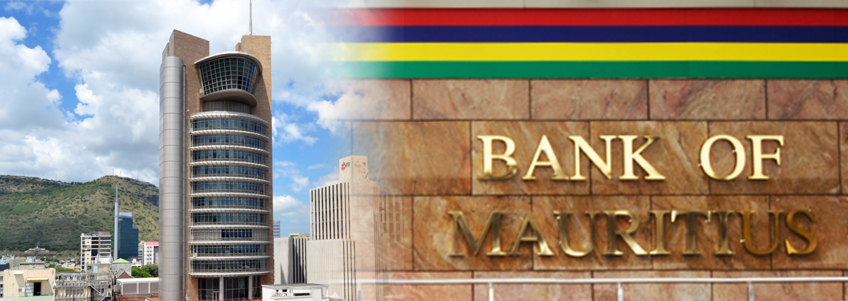
Bank of Mauritius holds Key Repo Rate steady at 4.50%

The Bank of Mauritius (BoM) released a communiqué on 13 August 2025 further to a meeting held by the Monetary Policy Committee (MPC), where it was agreed to maintain the Key Repo Rate (KRR) at 4.50% per annum.

Global growth prospects have improved slightly, with the IMF projecting to 3% in 2025 and 3.1% in 2026, though risks remain on the downside. Global inflation, though easing, continues to exceed central banks’ targets, requiring cautious policy responses.

Domestically, GDP growth is expected at around 3% in 2025, supported by a rebound in tourism but tempered by fiscal consolidation and global uncertainty. Inflation rose to 3.1% in July, with annual inflation at 5.2%, though it is forecast to remain within the Bank’s 2–5% target range.

Financial conditions remain stable. The foreign exchange market is stabilising, with inflows up by USD 866 million compared to last year, and the banking sector remains resilient and well-positioned to withstand potential shocks.

Given the balance of risks and uncertainties, the MPC judged that holding the steady rate is the most prudent course of action to balance growth and inflation risks, maintain price stability and support economic development. The Committee remains ready to act outside scheduled meetings, if required.

More information can be accessed here.

CategoriesLatest News

Mauritius Finance Act 2025

The Mauritius Finance Act 2025, enacted on the 9th of August 2025, introduces a series of updates relating to global business, taxation, residency, and ease of doing business in Mauritius.

ITL’s newsletter highlights the key changes that have been implemented and what they mean for your structures and investments.

We invite you to have a look at our Newsletter by clicking here.

CategoriesLatest News

Mauritius and Botswana agree on New Double Taxation Treaty

Mauritius is set to sign a new Double Taxation Avoidance Agreement (DTAA) with the Republic of Botswana. This agreement is intended to replace the previous one which was signed in September 1995, with a modern framework which aligns with the OECD/G20 Base Erosion and Profit Shifting (BEPS) recommendations.

The new agreement will:

• Clearly delineate the respective taxing rights of Mauritius and Botswana with respect to income covered by the DTAA;

• Provide investors with greater certainty and predictability in their business involving either country;

• Foster a more favourable business environment to encourage cross-border investment flows;

• Facilitate the exchange of tax-related information between the two jurisdictions to bolster their efforts in combatting tax evasion and associated malpractices; and

• Offer taxpayers an effective mechanism for the resolution of disputes.

We will endeavour to provide you with more information on the signature of the new DTAA with Botswana in due course.

CategoriesLatest News

Mauritius positions itself as gateway for Chinese investment into Africa

The Economic Development Board (EDB) of Mauritius hosted Her Excellency Dr. Huang Shifang, Ambassador of the People’s Republic of China to Mauritius, and Mrs. Wang Lei, Economic and Commercial Counsellor, for a courtesy call with Mr. Mahen Kundasamy in July 2025.

This meeting reaffirmed the strong diplomatic and economic ties between the two countries and explored new areas of collaboration under the Mauritius–China Free Trade Agreement and the Forum on China–Africa Cooperation (FOCAC).

Both sides highlighted the success of Chinese-supported infrastructure projects and emphasised Mauritius’ role as a gateway for Chinese enterprises into Africa, citing Huawei’s regional hub as a leading example.

Ambassador Huang expressed China’s commitment to strengthening Mauritius’ position as a financial and investment hub to drive triangular cooperation between China, Mauritius, and Africa.

The EDB reiterated its support for Chinese investors and its dedication to advancing cooperation in priority areas including climate resilience, digital transformation, and sustainable trade, while reinforcing Mauritius’ role as a trusted partner for regional and continental growth.

CategoriesLatest News

Mauritius and EU to sign EUR 3.5M Financing Agreement for Circular Economy

Mauritius and the European Commission have agreed to sign a EUR 3.5 million Financing Agreement for the implementation of the Circular Economy Roadmap. The 48-month programme aims to strengthen socially inclusive and environmentally sustainable development in Mauritius.

This initiative focuses on two key objectives:

1. Strengthening the institutional and regulatory framework for implementing the national Circular Economy Roadmap and Action Plan; and

2. Enhancing the effectiveness of circular economy initiatives in the built environment sector, with a particular focus on women entrepreneurs.

The Action Plan will contribute directly to achieving:

• Sustainable Development Goal (SDG) 12 (Responsible Consumption and Production) and indirectly SDG 9 (Industry, Innovation and Infrastructure),

• SDG 13 (Climate Action),

• SDG 15 (Life on Land), SDG 14 (Life below Water),

• SDG 10 (Reduced Inequalities),

• SDG 5 (Gender Equality),

• SDG 8 (Decent Work and Economic Growth), SDG 1 (No Poverty), and

• SDG 17 (Partnerships for the Goals).

CategoriesLatest News

Global Innovation Index 2025: Most innovative Economy in the Sub-Saharan Africa region

Mauritius has reinforced its reputation as Africa’s most innovative economy, climbing two places to 53rd globally in the Global Innovation Index (GII) 2025 released by World Intellectual Property Organization’s (WIPO), in partnership with Cornell University and INSEAD Business School. This marks a steady improvement from its 55th position in 2024 and reaffirms the country’s leadership role on the continent.

The Global Innovation Index assesses nearly 140 economies using 80 indicators across areas such as institutions, human capital, infrastructure, market sophistication, business sophistication, and innovation outputs.

Mauritius’ advancement this year is largely attributed to:

1. Increased venture capital activity, with growth in deals and investors relative to GDP.

2. Strong institutions and a favourable regulatory framework, which provide stability and support for businesses and innovators.

While Mauritius performs strongly in innovation inputs, it continues to face challenges in translating these into outputs, particularly in knowledge and technology products, patents, and creative industries.

As the regional leader, Mauritius serves as a benchmark for innovation-driven growth in Africa. To sustain its momentum, experts suggest greater investment in research and development, stronger public–private partnerships, and policie

You may access the full report here.

CategoriesLatest News

Henley & Partners Passport Index: Mauritius ranked 26ᵗʰ worldwide

Mauritius has improved its global ranking in the latest edition of the Henley & Partners Passport Index 2025, with Mauritian passport holders now enjoying visa-free or visa-on-arrival access to approximately 149 destinations worldwide. In fact, Mauritius secures the 26th place, rising two spots, reflecting strengthened diplomatic efforts and its commitment to international cooperation which continues to enhance its reputation as a trusted and connected nation. This index assesses travel freedom and provides an overview of the current trends influencing mobility patterns across the world.

Still rooted to the first position in Africa, Seychelles ranks at the 23rd spot globally, ahead of Mauritius, with visa-free access to 156 of the 227 global destinations included in the list.

Both countries uphold their titles as the most travel friendly passports on the African continent. For more insights, you may access the full report here.

CategoriesLatest News

Mauritius tops Africa in Economic Freedom Index 2025

Mauritius has reaffirmed its position as the most economically free nation in the Sub-Saharan Africa region, securing the 15th rank globally in the 2025 Index of Economic Freedom, published by the Heritage Foundation. With an overall score of 75.0, Mauritius is classified as ‘Mostly Free’, marking a 3.5 points improvement from the previous year.

Mauritius’ high ranking is underpinned by a strong rule of law, transparent governance, and an efficient regulatory environment that promotes entrepreneurship and investment. The nation also benefits from simplified business start-up procedures, flexible labour regulations, and a commitment to monetary stability, all of which enhance investor confidence.

This performance reinforces Mauritius’ position as a regional leader in economic freedom, offering a conducive environment for investment, trade, and business growth. By consolidating its institutional resilience, Mauritius not only strengthens its competitive advantage but also sets a benchmark for other African nations striving to improve economic governance and attract global investment.

You may access the full report from the Heritage Foundation here.

Need Help?